
Countless of ancient books about the end-times were written in the Middle East and the Mediterranean region. They were not only Jewish or Christian, that literary genre spanned many religions and cultures. Most of of the writings were lost forever and those which survived are rarely looked at today. (Who read The Book of Enoch?) However, we share a world with hundreds of millions who believe that certain prophecies written by an ancient Jewish author named Daniel speak of our future.
One major purpose of writing that book was to encourage those persecuted under the Seleucids to stay resilient in their worship of God and their observance of Jewish laws, and to remember that the kingdom of God is near, which will put an end to their persecution.
The Book of Daniel gives clear dates and its author, Daniel, claims that he served under the following kings:
a. King Nebuchadnezzar of Babylon
b. King Belshazzar of Babylon
c. King Darius the Mede who took over Babylon
d. King Cyrus the Great of Persia
Issues:
1. Historical sources indicate that Belshazzar was not the son of Nebuchadnezzar as claimed in the book (Daniel 5:21-22) but one of his successors. Also, he was a prince, and never a Babylonian king. His story is probably fictional: He knew his fate is sealed, i.e. would be killed, after reading the miraculous “writing on the wall” (yes, that’s where the phrase comes from).
2. Media was an ancient country of northwestern Iran, located in the modern regions of Azerbaijan and Kurdistan. The Medes are considered among the ancestors of modern-day Kurds. However, historically, there never existed a Median Kingdom period ruling over the Jewish people, supposedly preceding the Persians, nor a king named Darius the Mede, who defeated the Babylonians until Cyrus, the Persian conqueror, arrived to defeat him. It was Cyrus who defeated the Babylonians, with no “Median” period between the Babylonians and the Persians!
Daniel 5: 30-31
30 In that night was Belshazzar the king of the Chaldean slain.
31 And Darius the Median took the kingdom, being about threescore and two years old.
Note: “Chaldeans” is historically interchangeable with Babylonians.
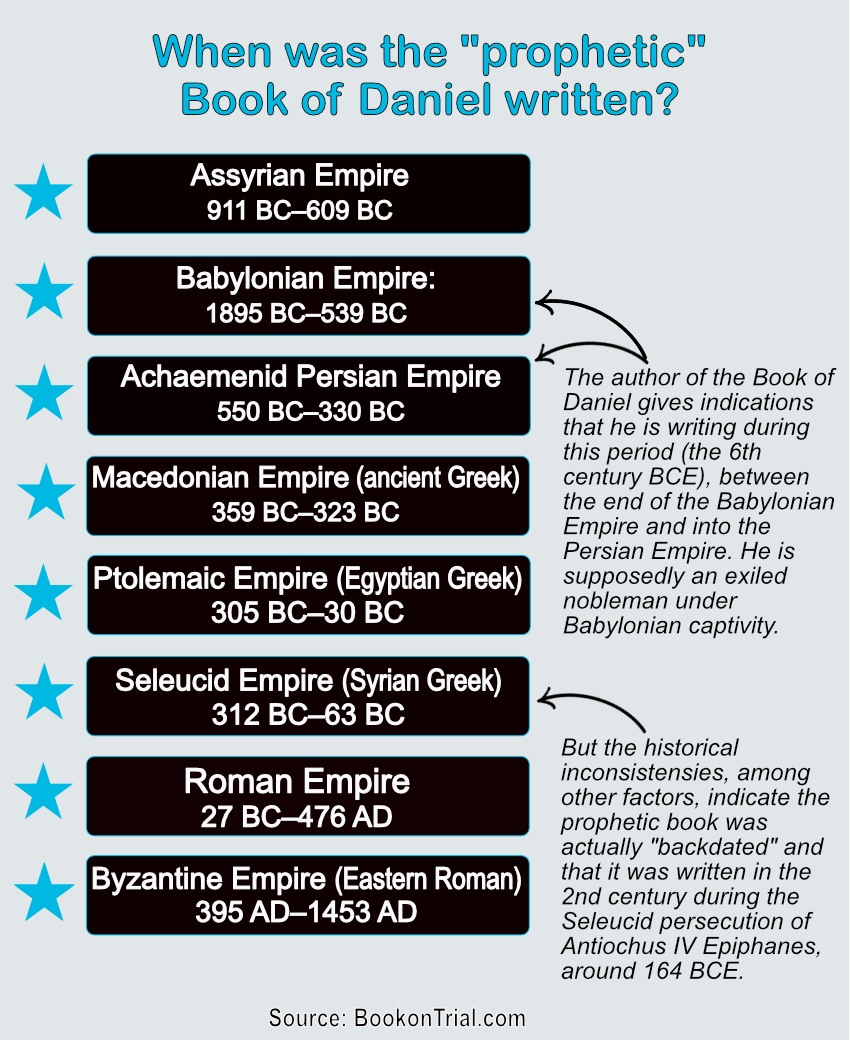
Backdating by 400 years:
1. There exists historical inaccuracies regarding the succession of kings and other great events when they supposedly took place during the author’s lifetime!
2. “Predictions” are more detailed and remarkably accurate for events that belong to the “future” Seleucid period such as the ban of sacrifice and the desecration of the temple. (Bear in mind that is when the book was probably written.)
3. Linguistic features demonstrate that the book was written at a later period, most importantly, the use of Greek loanwords.
598/7 BCE Second Babylonian invasion of Judea. Nebuchadnezzar takes the teatures of the Temple and thousands of capitives including Ezekiel and places Zedekiah on the throne of Judah. Siege and fall of Jerusalem. Second deportation.
587/6 BCE Siege and fall of Jerusalem. Solomon’s Temple destroyed. Third deportation of Jews to Babylon.
546 BCE Cryus II the Great is declared king of Persia.
539 BCE Persians conquer Babylon.
538 BCE First Decree of Cyrus allows Jews to return to Jerusalem.
537 BCE A small population of Jews choose to return to Judea. THe altar may have been restored at that point.
536 BCE The temple foundation is laid in Jerusalem
534 BCE Opposition to the rebuilding emerges and work on the Temple is ceases.
521 BCE King Darius I find the original decree of Cyrus, reaffirms it and allows the rebuilding to continue.
520 BCE Rebuilding of the Temple (Second Temple) resumed.
515 BCE Rebuilding of the Temple is complete.
457 BCE A degree by Artaxerxes I to restore and rebuild Jerusalem
It should be noted that believers in Biblical inerrancy have their own responses to the above historical blunders though they are not convincing. For example, they might argue that the fictional Darius the Mede was just another name for the local governor of Babylon, Gobryas, or even claim that it was an alias for Cyrus the Great.
Nebuchadnezzar’s dream retold by Daniel about a statue made of four metals
Daniel 2: 31—35
31 “You were looking, O king, and lo! there was a great statue. This statue was huge, its brilliance extraordinary; it was standing before you, and its appearance was frightening. 32 The head of that statue was of fine gold, its chest and arms of silver, its middle and thighs of bronze, 33 its legs of iron, its feet partly of iron and partly of clay. 34 As you looked on, a stone was cut out, not by human hands, and it struck the statue on its feet of iron and clay and broke them in pieces. 35 Then the iron, the clay, the bronze, the silver, and the gold, were all broken in pieces and became like the chaff of the summer threshing floors; and the wind carried them away, so that not a trace of them could be found. But the stone that struck the statue became a great mountain and filled the whole earth.
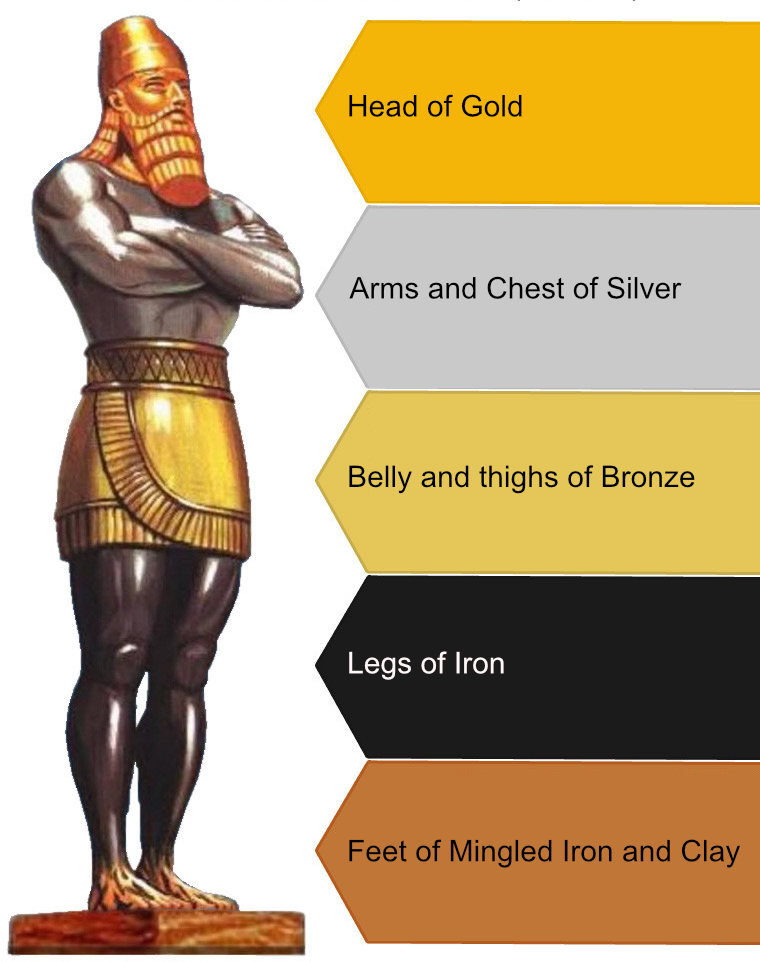
Interpretation of the “statue” dream: Four kingdoms replaced by a fifth
Daniel 2: 37—44
37 You, O king, the king of kings — to whom the God of heaven has given the kingdom, the power, the might, and the glory, 38 into whose hand he has given human beings, wherever they live, the wild animals of the field, and the birds of the air, and whom he has established as ruler over them all — you are the head of gold. 39 After you shall arise another kingdom inferior to yours, and yet a third kingdom of bronze, which shall rule over the whole earth. 40 And there shall be a fourth kingdom, strong as iron; just as iron crushes and smashes everything, it shall crush and shatter all these. 41 As you saw the feet and toes partly of potter’s clay and partly of iron, it shall be a divided kingdom; but some of the strength of iron shall be in it, as you saw the iron mixed with the clay. 42 As the toes of the feet were part iron and part clay, so the kingdom shall be partly strong and partly brittle. 43 As you saw the iron mixed with clay, so will they mix with one another in marriage, but they will not hold together, just as iron does not mix with clay. 44 And in the days of those kings the God of heaven will set up a kingdom that shall never be destroyed, nor shall this kingdom be left to another people. It shall crush all these kingdoms and bring them to an end, and it shall stand forever
If you are a critical non-dogmatic scholar, you most likely will reach the following conclusion:
Most probably the four empires in the Book of Daniel are:
1. Babylonian Kingdom (head of gold)
2. The Median Kingdom (arms and chest of silver)
3. The Persian Kingdom (belly and thighs of bronze)
4. The ancient Greek empire (Macedonian Kingdom) of Alexander the Great breaking into Seleucid Syria and Ptolemaic Egypt (legs of iron but the feet are a mix between clay and iron, i.e. a divided kingdom)
Considering that the author was writing under the Seleucid rule of Judea, the above makes sense including mistakes (like the fictional Median Kingdom) from 400 years earlier. No mention of a Roman Empire since it did not exist yet.
If you are a believer (Christian or Jew), then you’d follow this traditional explanation
If you are a believe who views the words of Daniel as divinely written, then you will embrace the following explanation which purports that Daniel predicted the future, which means you have too many kingdoms to fit into that four-kingdom model of Babylon, Medo-Persia, Greece and Rome:
1. The Babylonian Kingdom (confirmed by the author)
2. The Medo-Persian Kingdom: Believes claim that the Median and Persian Kingdoms are the same (some believers might argue that there is no mention of a “Median kingdom” but the writer explicitly mentions a king of Medes in Daniel 8:20)
3. The Greek Kingdom
4. The Roman Kingdom. A believer would point out as proof its breakup into a Western and Eastern (Byzantine) Roman Empires.
This interpretation would have been prevalent among the earliest Christians. It would have taken a new meaning that the Lord is coming soon to end their suffering under the fifth kingdom of Pagan Rome which viciously persecuted them. When new apocalyptic material was written centuries later, that is the Book of Revelation, for a Christian audience, clear references were made to the “evil” city of Rome. The Church Fathers also subscribed to the same interpretation.
But the Roman empire collapsed, and there was no Heaven after
For many centuries onward, the above was the traditional model to explain the kingdoms puzzle. However the Roman empire collapsed and the Kingdom of God did not seem to arrive. That is when believers took Rome as a symbol that could fit any historical period or any “kingdom”: Nazi Germany, Iraq, USA, European Union, the United Nations, a world government, etc.
The premise of the book is that each world-empire is more evil than the one preceding it.
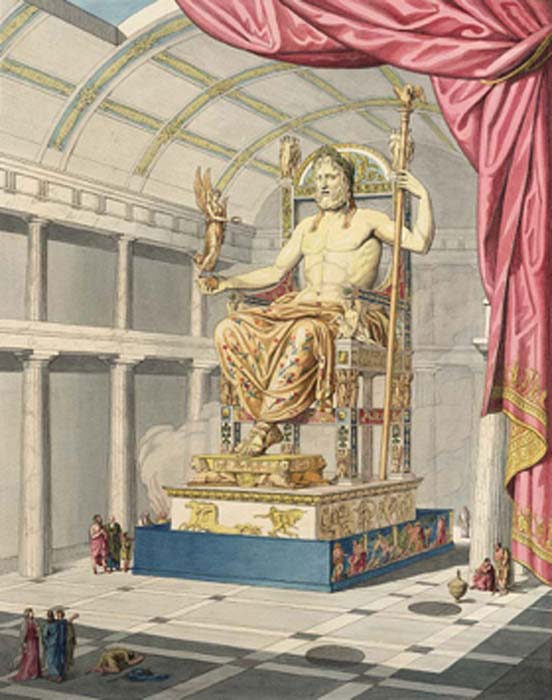
He tells of “a mighty king who shall arise and rule with great dominion” (Daniel 11:3) who can be recognized as Alexander (336 – 323 BCE). He “predicts” the division of the Greek empire after Alexander’s death and the wars between the Ptolemies who rule in Egypt (the “kings of the south”) and the Seleucids who rule in Babylon (the “kings of the north”). These general prediction become much more detailed and specific when he predicts the conquest of the king of the south by a king of the north who “shall do as neither his fathers nor his father’s fathers have done, scattering among them plunder, spoil, and goods” (11:24). (See also 7:7-10, 8:9-12). This king is “predicted” to cause the sacrifices of the Temple to cease (9:27)and to set up a “desolating sacrilege” in the Temple (12:11) This can be none other than Antiochus IV Epiphanes, the Seleucid ruler of Babylon who profaned the Jerusalem Temple in 167 BCE and set up a statue of Zeus with whom he identified himself. Unfortunately, after these remarkably accurate “predictions” Daniel goes awry at (11:40) when he predicts that this king will be attacked by the king of the south etc. This does not accord with any historical event.
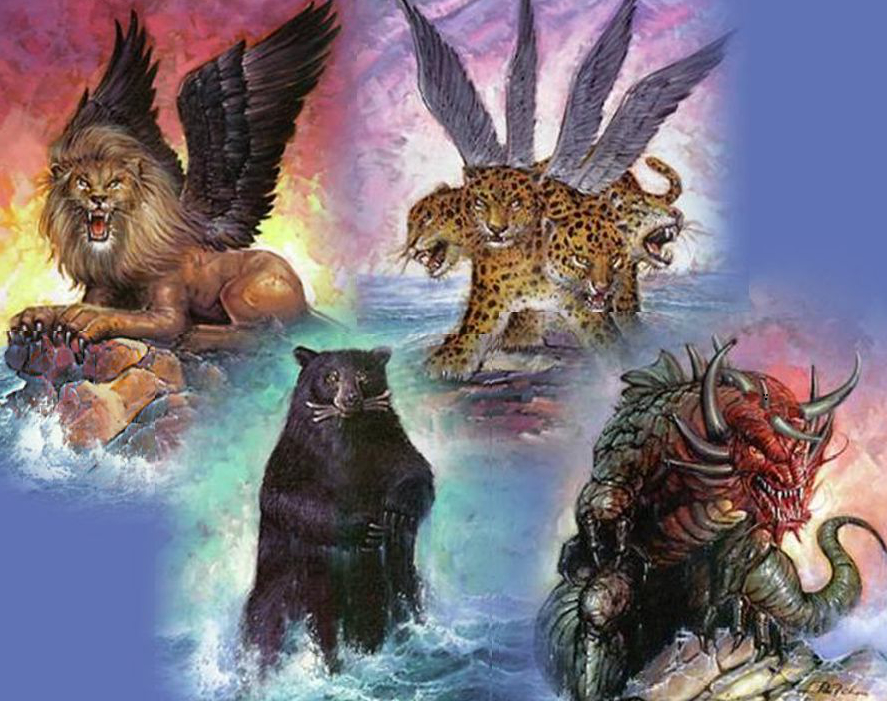
Daniel’s dream of four beasts
Daniel 7: 2—8
2 I, Daniel, saw in my vision by night the four winds of heaven stirring up the great sea, 3 and four great beasts came up out of the sea, different from one another. 4 The first was like a lion and had eagles’ wings. Then, as I watched, its wings were plucked off, and it was lifted up from the ground and made to stand on two feet like a human being; and a human mind was given to it. 5 Another beast appeared, a second one, that looked like a bear. It was raised up on one side, had three tusks in its mouth among its teeth and was told, “Arise, devour many bodies!” 6 After this, as I watched, another appeared, like a leopard. The beast had four wings of a bird on its back and four heads; and dominion was given to it. 7 After this I saw in the visions by night a fourth beast, terrifying and dreadful and exceedingly strong. It had great iron teeth and was devouring, breaking in pieces, and stamping what was left with its feet. It was different from all the beasts that preceded it, and it had ten horns. 8 I was considering the horns, when another horn appeared, a little one coming up among them; to make room for it, three of the earlier horns were plucked up by the roots. There were eyes like human eyes in this horn, and a mouth speaking arrogantly.
Angelic figure delivers the interpretation of the “beasts” vision: Four kingdoms replaced by a fifth
Out of sympathy for the head-scratching reader, the author tells us that a heavenly character is here to explain it all to us. However, the explanation brings about even more questions.
Daniel 7: 15—27
15 As for me, Daniel, my spirit was troubled within me, and the visions of my head terrified me. 16 I approached one of the attendants to ask him the truth concerning all this. So he said that he would disclose to me the interpretation of the matter: 17 “As for these four great beasts, four kings shall arise out of the earth. 18 But the holy ones of the Most High shall receive the kingdom and possess the kingdom forever — forever and ever.”19 Then I desired to know the truth concerning the fourth beast, which was different from all the rest, exceedingly terrifying, with its teeth of iron and claws of bronze, and which devoured and broke in pieces, and stamped what was left with its feet; 20 and concerning the ten horns that were on its head, and concerning the other horn, which came up and to make room for which three of them fell out — the horn that had eyes and a mouth that spoke arrogantly, and that seemed greater than the others. 21 As I looked, this horn made war with the holy ones and was prevailing over them, 22 until the Ancient One came; then judgment was given for the holy ones of the Most High, and the time arrived when the holy ones gained possession of the kingdom.
23 This is what he said: “As for the fourth beast, there shall be a fourth kingdom on earth that shall be different from all the other kingdoms; it shall devour the whole earth, and trample it down, and break it to pieces. 24 As for the ten horns, out of this kingdom ten kings shall arise, and another shall arise after them. This one shall be different from the former ones, and shall put down three kings. 25 He shall speak words against the Most High, shall wear out the holy ones of the Most High, and shall attempt to change the sacred seasons and the law; and they shall be given into his power for a time, two times, and half a time. 26 Then the court shall sit in judgment,
and his dominion shall be taken away,
to be consumed and totally destroyed.27 The kingship and dominion
and the greatness of the kingdoms under the whole heaven
shall be given to the people of the holy ones of the Most High;
their kingdom shall be an everlasting kingdom,
and all dominions shall serve and obey them.”
Who are the four beasts?
Critical scholars generally agree that the four beasts, similar to the four materials of the statue of Nebuchadnezzar’s dream, represent Babylon (the lion), Media (the bear), Persia (the leopard) and the Greek Empire (the fourth beast).
Again, believers would disagree and claim that the four beasts are Babylon, Medo-Persia, Greece and Rome.
What could be easily concluded is that the horns represent kings, unlike the beasts (kingdoms). Critical scholars view the ten horns as the ten kings of the Seleucid dynasty who preceded Antiochus Epiphanes, aka Antiochus IV. He looms large in the text as someone who persecuted the Jews. In that interpretation, he is represented by the rising “little horn.” The three uprooted (overthrown) horns represent the three men, King Seleucus Philopator, aka Seleucus IV, and his two sons Demetrius and Antiochus, who had the right to the throne before Antiochus Epiphanes replaced them. The father and one of the sons were killed.
One great indication that the little horn is most likely Antiochus Epiphanes is in Daniel 7:21 where the author describes him as someone who “made war with the holy ones” and blasphemes against God (Daniel 7:25). That is a reference to the great persecution of Jews during the author’s era and the desecration of their holy temple.
But it still does not add up!
However, that theory is not water-tight! Antiochus Epiphanes was not the eleventh king (the “little horn”) in the line, but the eighth. (Scholars respond that the number ten is just approximate as was sometimes used in ancient cultures.) Reality was more complicated than one horn “uprooting” three. King Seleucus Philopator was assassinated by his minister Heliodorus. In other words, Antiochus Epiphanes was not responsible, though the author might have wanted to lay all the “evil” charges at his target. Also, if all horns are kings, well, the sons were never reigning kings. A possible response is that usage is just for “dramatization purposes” or perhaps an ancient culture might have seen them as kings even if they never reigned.
Where is the fourth kingdom? And who is its “little horn”?
One major puzzle that followed believers for centuries is in Daniel 7:20—22 where the author declares that the evil king’s reign would end and God would arrive to establish his never-ending kingdom. Well, many kingdoms, since the Seleucids, have risen and fallen and that prophecy never materialized. Since most believers take the verses literally, they try to find an exit by moving the “king in question” with each era. That first happened in the early centuries of Christianity when the fourth kingdom was supposed to be Rome. Rome fell, so believers claimed that the Greek-speaking Eastern Roman Empire still existed. That one fell too and at the same time the Protestant movement emerged in Europe, that made the Pope the “little horn.”
Many Christians would approach the fourth kingdom as yet to arrive. The ten horns are to emerge in the future.
Christian interpreters throughout the ages have put the label of the “little horn” on Islam’s prophet Mohammed, the Papacy, the Islamic Ottoman Empire, or a future antichrist figure that is yet to emerge. Jewish interpreters went in a different direction. For example the famous medieval rabbi, Rashi, and others put the label on Emperor Nero or Titus who led the destruction of the city of Jerusalem in AD 70.
The puzzle gets complicated with yet another empire: the Ottomans
The rise of the Islamic empire of the Ottomans, was a particular challenge for the faithful because it does not seem to be mentioned in the sequence of kingdoms. The prophecies do not include an Islamic empire that long ruled most of the Middle East including the holy city of Jerusalem from 1516 to 1917.
Then another theory emerges: the horns represent the European Union
For example, Hal Lindsey of the American Evangelical movement, wrote in this book that the ten horns represent a ten-nation confederacy (a European Union organization) from which the Antichrist would emerge. He conveniently ignores the fact the author of Daniel stated clearly that the ten horns are ten kings, not nations (Daniel 7:24). But that does not matter if you are twisting the ancient words to make it fit any theory! Lindsey also ignores the fact that the event of a “little horn” rising to profane the temple and persecute the Jews already happened in 167 BCE.
The Ancient One (God on the throne): The throne vision and the divine court
The next scene is the Judgement Day, where God would decide the fate of everyone and bring punishment against Israel’s enemies. One confusing element in this vision is that though the Jews are a monotheistic people, the visions begins with multiple thrones, rather than a single one for Yahweh.
Daniel 7: 9—14
9 As I watched, thrones were set in place,
and an Ancient One took his throne,
his clothing was white as snow,
and the hair of his head like pure wool;
his throne was fiery flames,
and its wheels were burning fire.
10 A stream of fire issued
and flowed out from his presence.
A thousand thousands served him,
and ten thousand times ten thousand stood attending him.
The court sat in judgment,
and the books were opened.
11 I watched then because of the noise of the arrogant words that the horn was speaking. And as I watched, the beast was put to death, and its body destroyed and given over to be burned with fire. 12 As for the rest of the beasts, their dominion was taken away, but their lives were prolonged for a season and a time. 13 As I watched in the night visions,
I saw one like a human being
coming with the clouds of heaven.
And he came to the Ancient One
and was presented before him.
14 To him was given dominion
and glory and kingship,
that all peoples, nations, and languages
should serve him.
His dominion is an everlasting dominion
that shall not pass away,
and his kingship is one
that shall never be destroyed.
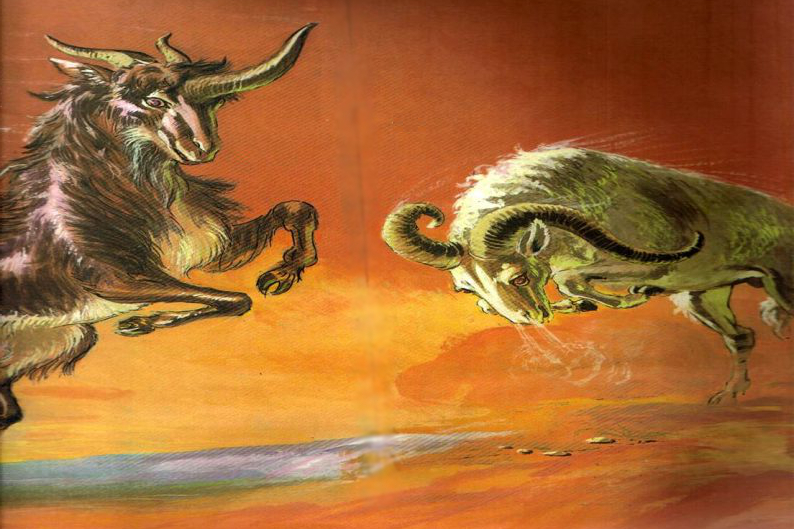
Daniel’s vision of a male goat and a ram
Daniel 8: 1—14
1 In the third year of the reign of King Belshazzar a vision appeared to me, Daniel, after the one that had appeared to me at first. 2 In the vision I was looking and saw myself in Susa the capital, in the province of Elam, and I was by the river Ulai. 3 I looked up and saw a ram standing beside the river. It had two horns. Both horns were long, but one was longer than the other, and the longer one came up second. 4 I saw the ram charging westward and northward and southward. All beasts were powerless to withstand it, and no one could rescue from its power; it did as it pleased and became strong.5 As I was watching, a male goat appeared from the west, coming across the face of the whole earth without touching the ground. The goat had a horn between its eyes. 6 It came toward the ram with the two horns that I had seen standing beside the river, and it ran at it with savage force. 7 I saw it approaching the ram. It was enraged against it and struck the ram, breaking its two horns. The ram did not have power to withstand it; it threw the ram down to the ground and trampled upon it, and there was no one who could rescue the ram from its power. 8 Then the male goat grew exceedingly great; but at the height of its power, the great horn was broken, and in its place there came up four prominent horns toward the four winds of heaven. 9 Out of one of them came another horn, a little one, which grew exceedingly great toward the south, toward the east, and toward the beautiful land. 10 It grew as high as the host of heaven. It threw down to the earth some of the host and some of the stars, and trampled on them. 11 Even against the prince of the host it acted arrogantly; it took the regular burnt offering away from him and overthrew the place of his sanctuary. 12 Because of wickedness, the host was given over to it together with the regular burnt offering; it cast truth to the ground, and kept prospering in what it did.
The angel Gabriel’s interpretation of Daniel’s goat and ram vision, and another “horns” puzzle
At this point, another angel appears and feels sorry for the author, who then asks Gabriel to help out again with the interpretation:
Daniel 8: 15—27
15 When I, Daniel, had seen the vision, I tried to understand it. Then someone appeared standing before me, having the appearance of a man, 16 and I heard a human voice by the Ulai, calling, “Gabriel, help this man understand the vision.” 17 So he came near where I stood; and when he came, I became frightened and fell prostrate. But he said to me, “Understand, O mortal, that the vision is for the time of the end.”18 As he was speaking to me, I fell into a trance, face to the ground; then he touched me and set me on my feet. 19 He said, “Listen, and I will tell you what will take place later in the period of wrath; for it refers to the appointed time of the end. 20 As for the ram that you saw with the two horns, these are the kings of Media and Persia. 21 The male goat is the king of Greece, and the great horn between its eyes is the first king. 22 As for the horn that was broken, in place of which four others arose, four kingdoms shall arise from his nation, but not with his power. 23 At the end of their rule, when the transgressions have reached their full measure, a king of bold countenance shall arise, skilled in intrigue. 24 He shall grow strong in power, shall cause fearful destruction, and shall succeed in what he does. He shall destroy the powerful and the people of the holy ones. 25 By his cunning he shall make deceit prosper under his hand, and in his own mind he shall be great. Without warning he shall destroy many and shall even rise up against the Prince of princes. But he shall be broken, and not by human hands. 26 The vision of the evenings and the mornings that has been told is true. As for you, seal up the vision, for it refers to many days from now.”
27 So I, Daniel, was overcome and lay sick for some days; then I arose and went about the king’s business. But I was dismayed by the vision and did not understand it.
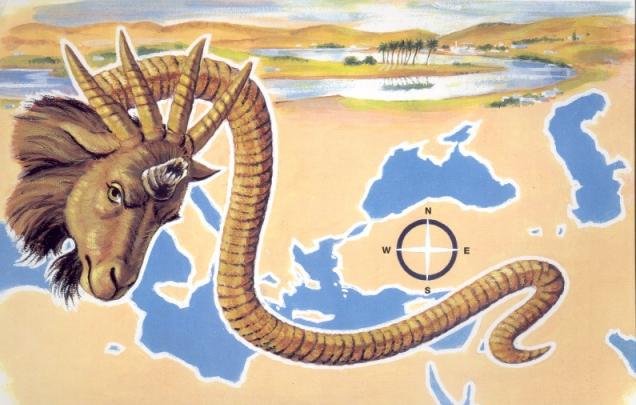
This particular vision does not leave too much to speculation. It clearly identifies the two-horned ram as the kings of Media and Persia. As for the male goat, that the text clearly says that it is Greece. One concludes that its “great horn” is Alexander the Great. When it is broken and replaced by four horns, that is a reference to the division of Alexander’s empire among his four generals: Cassander (Greece and Macedonia), Seleucus (Syria, Babylonia, and Persia), Ptolemy (Egypt), and Lysimachus (Thrace and Asia Minor). The “exceedingly great horn” in this vision, as in the dream of four beasts (above) represents Antiochus Epiphanes. His attacks on Egypt (“south” as mentioned in the text), Persia (“east”) and Judea (“the beautiful land”) qualify him to be the little horn. Also, Antiochus’s blasphemous actions and persecution match what is described in the text including
Opponents of that theory challenge the logic of Antiochus Epiphanes, already represented as one of the four horns (four kingdoms), being simultaneously the “exceedingly great horn” growing. Also, if a horn symbolizes a kingdom throughout the entire text, then why break the schema here and assume this “exceedingly great horn” stands for a person. They also question whether the power of Antiochus really fit the “exceedingly great” power described by the author, considering that, for example, the Jews were able to eventually challenge his rule and gain their independence. Those who choose to oppose the above theory, present alternatives: Seventh-Day Adventists argue that the “exceedingly great horn” is the Papacy. Some Evangelicals propose Imperial Rome as the target who would eventually profane and destroy the Second Temple in AD 70. Other Evangelicals argue that an evil future world empire is the “exceedingly great horn.”
164 BCE: Antiochus dies and the Jewish persecution1 ends. The temple is rededicated and Hannukah is instituted as a yearly celebration. Read the details here on the Seventy Weeks prophecy (Daniel 9: 24—27)
Daniel is delivered another prophecy by an angel regarding the duration of oppression between the abolishing of the daily sacrifice and the abomination of desolation until the end of oppression (the restoration of the temple): “2,300 evenings and mornings,” or 1,150 days
At the end of the Chapter 8 after the vision of a male goat and a ram, we are given a number of days , i.e. the duration of oppression.
Daniel 8: 13—14
13 Then I heard a holy one speaking, and another holy one said to the one that spoke, “For how long is this vision concerning the regular burnt offering, the transgression that makes desolate, and the giving over of the sanctuary and host to be trampled?” 14 And he answered him, “For two thousand three hundred evenings and mornings; then the sanctuary shall be restored to its rightful state.”
The angel “updates” the period two more times: There is 1,290 days… Blessed are those who wait until the end of the 1,335 days
Daniel 12
5 Then I, Daniel, looked, and two others appeared, one standing on this bank of the stream and one on the other. 6 One of them said to the man clothed in linen, who was upstream, “How long shall it be until the end of these wonders?” 7 The man clothed in linen, who was upstream, raised his right hand and his left hand toward heaven. And I heard him swear by the one who lives forever that it would be for a time, two times, and half a time, and that when the shattering of the power of the holy people comes to an end, all these things would be accomplished. 8 I heard but could not understand; so I said, “My lord, what shall be the outcome of these things?” 9 He said, “Go your way, Daniel, for the words are to remain secret and sealed until the time of the end. 10 Many shall be purified, cleansed, and refined, but the wicked shall continue to act wickedly. None of the wicked shall understand, but those who are wise shall understand. 11 From the time that the regular burnt offering is taken away and the abomination that desolates is set up, there shall be one thousand two hundred ninety days. 12 Happy are those who persevere and attain the thousand three hundred thirty-five days. 13 But you, go your way, and rest; you shall rise for your reward at the end of the days.”
Important observations:
a. Unlike Daniel 8, here in in Daniel 12, we are not provided a particular even that marks the end of the period of oppression.
b. Moreover we’re given two different numbers within one sentence which opens the gateway for wild speculation.
To summarize, the three numbers given in the Book of Daniel (2,300 evenings and mornings, 1,290 days, 1,335 days) make the prophecy particularly challenging.
Regarding the first number, an angel informs Daniel that the duration of oppression, i.e. from the time the offering is abolished and the temple is desecrated until it is rededicated, is 2,300 evenings and morning, which, if halved, would produce 1,150 days. But is that the right method of interpreting it? Is it 2,300 days (six years and four months) or 1,150 days (four years and two months)? Most readers of Daniel read 2,300 evenings and mornings as 1,150 days but that is not universal. Some read it as 2,300 full days. If that is not confusing enough, one group, the Seventh-Day Adventists, interpret that number as 2,300 years. It is unlikely that it refers to six years and five months (2,300 full days) since nothing remarkable happened at the end of that period.
Many Christians believe that the number of days belong to the historical period of Antiochus IV Epiphanes and the desecration of the temple, not about the future of the world, although they would believe that these were prophecies written hundred of years in advance, not during the oppression period as scholars believe.
Three numbers: Wild Speculation
1. Are they all a reference to the same duration?
2. Were the latter numbers added after the earlier one, i.e. predicted duration of oppression, failed?
3. Or perhaps, is there a significance in the events that mark the end of both 1,290 days and 1,335 days (45 days of difference? (Different events that have been proposed include cleaning of the temple, its rededication, and the death of Epi or even the time it took for the news of his death to arrive Judea. (DANIEL: Touchstone of Prophecy, p. 258)
4. Could it be that these two numbers are not of simultaneous periods and one precedes the other, resulting in a total of 2,625 literal days (around 7 years and 3 months)?
The questions that one could propose are long and could get very technical like what calendar to use and according to it, how many days are in a month or a year.
Hundreds of books, articles, dissertations and sermons have attempted to clarify and play the guessing game of what the above numbers mean, mostly ending in new predictions for the audience to watch for.
One reasonable conclusion is that the above numbers correspond to the period of cessation of the worship in the temple, which lasted for about three years and a half (“a time, two times, and half a time” in Daniel x:xx). That was probably a backdated prophecy. The numbers are not precise or perhaps they were never meant to be.
But to muddle matters even more, you could add more variables to consider, as many believers have for hundreds of years. You start by denying that the numerical values above portray events in the past, but the end of the world. If you are a believer, you have to do that since the author’s intention is primarily to tell you that the end of the world is very near. You could grab numbers from other parts of the Bible, like the Book of Revelation, mix them up with the ones here and reach a variety of conclusions regarding the end of the world and the Second Coming of Jesus.
The Internet became a cesspool for all speculations by anyone who wants to promote their own “discovery” and conspiracy theories about “Armageddon.” In the previous centuries, it took preachers a lot of courage and recklessness to make claims regarding the end of the world. Now, safely protected by anonymity, through a blog, and you could publish any theory. If it fails, the “Edit” button is available. That results in thousands of websites by religious amateurs who think they could solve the puzzle. Examples:
For hundreds of years, the worth in the Book of Daniel were twisted to conform to apocalyptic predictions made by pastors and Christian authors.
For example, Henry Archer, a British preacher counted 1335 from the end of the reign of Julian in 366 A.D., a Roman Emperor known for rejecting Christianity to predict that Christ is coming in 1700. Besides the arbitrariness of selecting that year as the starting point, Julian actually died in 360. The preacher died in the 1640s before seeing the unfulfillment of his prediction.
In USA, entire religious movement were built around the erroneous understanding of Daniel. The American preacher William Miller used the number of 2,300 and treated it in the form of years with the starting of at 457 BCE (the year when the restore of Jerusalem was decreed). He came to the conclusion that: “My principles in brief, are, that Jesus Christ will come again to this earth, cleanse, purify, and take possession of the same, with all the saints, sometime between March 21, 1843, and March 21, 1844.” What happened next is historically known as the Great Disappointment following the failure of his prediction. Hundreds of thousands (Millerites) had sold their possessions and gave up their jobs in that belief. It inaugurated an American obsession with Apocalyptic prophecies that new religions would rise up. Descendants of the Millerites are the Seventh Day Adventists and Jehovah’s Witnesses. Two sects that are obsessed with the Second Coming of Christ. An amusing historical twist took place when a Middle Eastern religion emerged following this American story: A Persian man claimed that the prediction was correct and he, himself, Baháʼu’lláh (1817 – 1892), was the Promised One and based on it he founded a religion with a significant following today: the Baháʼí Faith.
End in 1988
Hal Lindsey – The Late Great Planet Earth
End in 2007
https://i1.wp.com/ravshaulexposed.com/wp-content/uploads/2016/11/paul-sides-70th.gif?resize=595%2C595
End in 2012
http://www.charlesberner.org/Daniel%204%20with%20Charts.pdf
https://2028end.com/wp-content/uploads/2015/01/Creation-Chart-2000-x-1545-EARTH.jpg 2028 (this one is bizarre)
Find the one for 3000 AD
—————————–
The horrors of the period for the Jewish community seemed of “apocalyptic proportions.” Surely the Lord is coming…. mention here what happened….
end-times or end-time?
Evangelical Christians or Dispensationalist Christians
Four Kingdoms:
Anglo-America: https://i.pinimg.com/originals/47/6b/39/476b39e959c31eaf116704e44d10d29a.jpg
A future kingdom: http://www.northlandbiblechurch.com/SixKingdoms.pdf
Islamic Caliphate: https://imgv2-2-f.scribdassets.com/img/document/316001157/original/f774db1d6c/1590049228?v=1
Papal Rome & Modern Europe: https://linesandprecepts.com/wp-content/uploads/2016/07/mirror-image.jpg
America: https://finalapocalipse.wordpress.com/four-kingdoms/
Western Europe: https://i2.wp.com/gospelbibletruth.com/wp-content/uploads/2018/04/Statue-of-Kingdoms-191×300.jpg?resize=318%2C500&ssl=1
Hal Lindsey’s EU theory
One of the biggest problems to understanding the apocalyptic material of the Bible is that the Internet has on display thousands of websites and online bookstores sell hundreds of books that are almost all religious. A non-biased, non-academic understanding of the Biblical text is not easy to come by. Wikipedia is one source.
proclaim that the end is at hand
a language that evokes a catastrophe of cosmic proportions
cosmic imagery of the end of the world belong to the Hebrew prophets